Showing posts with label Photo of the day. Show all posts

Sunday, November 20, 2022

Curious Finds

 Several curious finds have been sitting in my email waiting to be shared.  Regina wins the "sharpest eye for nature" designation....

Photo by Regina Flora: Monarch Butterfly found at Reynolds Homestead

Photo by Regina Flora: Bushy Beard Lichen found at Reynolds Homestead


Photo by Regina Flora: Amber Jelly Fungus found at Reynolds Homestead

Photo by Regina Flora: Oak Leaf Blister, found by Fisher Dam

Photo by Dottie Haley: Autumn Meadowhawk Dragonfly


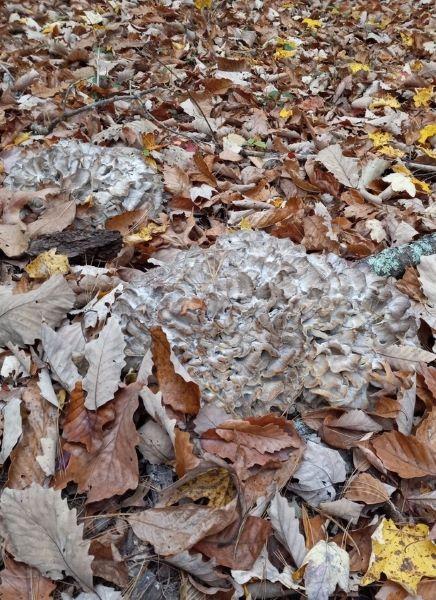
Photo by Regina Flora: Lion's Mane Fungus

Photo by Regina Flora: Harvesting Persimmon


Monday, October 31, 2022

Curious Findings

 There are more curious things to report this week that were found by sharp eyed naturalists..... 


Photo by Garnett Hudson: Bear paw print

Photo by Dottie Haley: Downy Rattlesnake Plantain

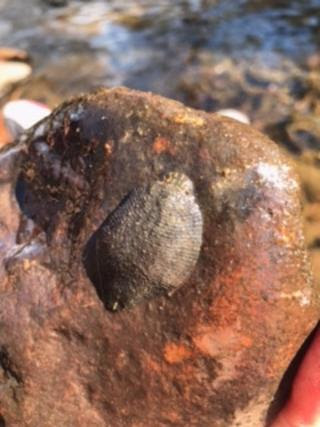
Photo by Mary Foster: Curious mollusk found under a rock in a stream at Clayton nature center in Bedford.     


The following photo needs some explanation.  According to this article on Insect Galls, there are around 1,500 species of insects that can create galls in plant leaves, branches and trunks.  Leaf galls are the least harmful to the plants.  I was familiar with gall wasps, but these may have been created by a midge (tiny fly).  I found more photos of the Oak Leaf Gall Midge on iNaturalist. 

Photo by Dottie Haley: Insect Galls

Always on the lookout for curious fungus, Dottie also spotted some Hen in the Woods (Grifola frondosa)  Read more about it here: https://www.mushroomexpert.com/grifola_frondosa.html


Photo by Dottie Haley: Hen in the Woods


Monday, October 17, 2022

Curious Findings

 We have a large set of curious findings this week!  

Bob spotted some curious creatures last week. Check out the Virginia Herpetological Society site for more information on our local snakes. 


Photo by Bob Becker: Possibly an Eastern Smooth Earthsnake

Photo by Bob Becker: Possibly a Northern Rough Greensnake


Photo by Bob Becker: Northern Ring-necked Snake


Photo by Bob Becker: Praying Mantis

Photo by Bob Becker: Deer fawn, poorly parked

A note on the fawn:  Mother deer will "park" their fawns for the day and expect them to stay put until she comes back to get them.  This mother chose a rather poor spot.  If you find a fawn, chances are it was told to stay put and is not abandoned.  Please leave any fawns alone and watch for the mother to return later in the day. 

Regina also found some curious things. 

Photo by Regina Flora: Color variation in Maple leaves


Photo by Kamara Nelson: Regina investigating the leaning nature of Sourwood trees

Photo by Kathy Fell: It is hard to miss the vibrant red of the Sourwood in fall!

Regina also provided a short lesson on the Beech Blight Aphid Grylloprociphilus imbricator), also known as boogie-woogie aphids.  These aphids have covered an entire lower limb of an American Beech, plus the ground under that branch. The aphids excrete “honeydew” which then leads to sooty mold fungus - but doesn’t kill tree.  For more information (and to learn about their boogie-woogie name), see the NC State Extension Publication.


Photo by Regina Flora: Beech Blight Aphids


And I'll end with my back yard!


Photo by Kathy Fell: Reds and yellows of fall

Thursday, October 13, 2022

Curious Findings

 It is time to report on more curious findings! 


First up is a large, fat caterpillar found by Dottie.  She posted it on iNaturalist and it was identified as a Regal Moth (Citheronia regalis).  https://www.inaturalist.org/taxa/81586-Citheronia-regalis


Photo by Dottie Haley


Valinda spotted a praying mantis.  Did you know there are 3 species commonly found in Virginia? The native species is the Carolina Mantis.  There is also a Chinese Mantis and a European Mantis that can be found here.  Which one is this?  Interesting article here: https://www.brandywine.org/conservancy/blog/invasive-mantis-species


Photo by Valinda Dyer: Male Praying Mantis

 Valinda also spotted a tree fungus.  I'm not an expert, but this might be Chicken of the Woods (Laetiporus sulphureus).  Read more here: https://www.mushroomexpert.com/laetiporus_sulphureus.html

Photo by Valinda Dyer

And lastly, a fantastic shot from the Basic Training Bird ID field trip in Danville.  This Red shouldered hawk was spotted by the group in a nearby tree. We watched it fly over our heads and into a squirrel's nest, where it poked around a bit, then made off with a large stick.  Not sure why, but that bird was on a mission for sure. 

Photo by Regina Flora


Monday, September 12, 2022

Photo of the day: Neoscona crucifera

 It is that time of year again when the orb weavers come out of hiding.  My first encounter this fall was on the way to check the rain gauge.  I started down the deck stairs and came to an abrupt halt.  There was a giant spider web about a foot from my face.  The spider had anchored one side on the stair rail to my right and the other side on a tree to my left.  Yes, there was a giant spider waiting in the middle.  I calmly backed up and found another way to get to the rain gauge. 

These orb weavers are nocturnal, but like to hang out in the center of their webs on fall mornings.  Looking around, I found another massive web across the sliding glass door to my bedroom. This one had a smaller (male) spider hanging out on the edge.  I came back later and found she had "invited" him for lunch.  She tossed the too-crunchy parts when she was done.....

Photo by Kathy Fell: Spotted Orb weaver and her lunch date....

Learn more about the orb weaver here: https://entnemdept.ufl.edu/creatures/misc/spiders/neoscona.htm


Tuesday, April 5, 2022

Spring has Sprung!


Spring has Sprung!   I decided to take a closer look around and check out the signs of spring in my yard.  As I enjoyed a little sun in my chair on the deck, I heard a cardinal.  I spotted him in the willow tree celebrating the day with a long and complex song.   He is a frequent visitor to my feeder.  I heard a lot of other birds too.  A carpenter bee flew up and buzzed about 3 ft from my face.  I see carpenter bees every year guarding the deck.  They usually hover over the stairs.  I heard a rustling in some dry leaves behind a planter and out scurried a pair of Five-lined skinks.  Later, a fence lizard joined me in soaking up some sun.  Around the yard I could see the pink flowers of redbud and creeping phlox.  On a short walk-about I spotted the first butterfly of the year and native violets and wood poppies in bloom. The dogwoods are getting ready to boom.  A check in the bluebird box revealed a partially constructed nest.  Looks like it is time to start logging observations for Nest Watch!

What are your favorite signs of spring in your yard?

Photo by Kathy Fell: Fence Lizard, basking in the sun

Photo by Kathy Fell: Cercis canadensis (Redbud) 

Photo by Kathy Fell: Phlox subulata (Creeping Phlox)


Photo by Kathy Fell: Stylophorum diphylllum (Wood Poppy)

Photo by Kathy Fell: Violet

Photo by Kathy Fell: Tiger Swallowtail


Wednesday, September 1, 2021

Photo of the day: Orb Weaver Spider


Neoscona crucifera

By Kathy Fell


Walking into spider webs gives me the creeps.  This past week, I went out behind the breezeway and was shocked to find a spider web spanning across the 10 ft patio.  Lucky for me, I spotted it before walking into the thing.  The clever spider left me safe passage to the breezeway door, so I let her keep her hunting ground.  But what spider made that massive web? I looked around the house and found two more smaller, but similar webs.  

Photo by Kathy Fell: Smaller web of a neighboring spider

That evening I went out in the dark of night, sporting a headlamp.  I spotted a very large spider making repairs to her very large web.  The top anchor point to the south is on the gutters and to the north is on a dogwood tree.  The top of the web is about 5 ft. off the ground.  I tried to take a picture, but she was working so quickly, my camera could not freeze the action.  I took mental notes and went to check the internet.  I identified the spider as Neoscona crucifera.  I found multiple common names: Spotted orb weaver, Heinz orb weaver, arboreal orb weaver and barn spider.  

Photo by Kathy Fell: Spider trying to look small


I checked on my spider friend the next day and discovered her enjoying a cicada for breakfast. When I approached with my camera, she scurried off to the safety of the dogwood tree.  I got a photo of her trying to look small, hiding on a leaf.  Later, I was able to get a picture of her finishing off her meal and submitted it to iNaturalist. 

Photo by Kathy Fell: Cicada for breakfast

This orb weaver is common across half of the US, generally nocturnal and most often sighted in the fall.  

Range map from https://spidersinohio.net/its-that-time-of-year-again/


I found out where my spider friend hides out during the day; rolled up inside a dogwood leaf tied shut with a little spider silk.

Photo by Kathy Fell: Do not disturb the sleeping spider.... 


All spiders have venom which they use to paralyze their prey.  The venom of this shy spider is not considered to be toxic to humans, but they will leave a mark.  It is always best to be respectful of our spider neighbors.

Friday, August 13, 2021

Member Photo: Rose pinks

 Submitted by Kathy Fell

On one of my recent walks about the gardens, I spotted a splash of pink.  I noticed one or two of these plants a few years ago and tried to remember not to “weed out” the plant after seeds had set.  I was hoping it would spread around.  I looked it up and found it to be Sabitia angularis; commonly known as Rose Pink.  This is one of the plants featured in the up-coming “Native Plants for Virginia’s Southern Piedmont” guide.


Photo by Kathy Fell: Sabatia anagularis (Rose Pink)

Rose Pinks are a biennial, which explains why they are always in a different spot in the garden each year. The plant forms a low rosette the first year.  The second year, it grows between 1 and 3 ft tall.  Bright pink to white flowers bloom from May to September.   Rose Pinks are native across the Southern Piedmont and most of Virginia.  Naturally found in open woods, fields, and meadows, they tolerate a wide range of light and moisture conditions.   The nectar attracts butterflies and other insects.  The deer have left mine alone.  

Rose Pinks are a Larval host plant for the Short-lined Chocolate moth (Argyrostrotis anilis). Check iNaturalist for a photo here.   I found a photo of the caterpillar here.   These caterpillars also feed on native plums, native crab apples, and native hawthorns.

I'll be sure to collect the seeds and spread them around for more splashes of pink in two years. 


Tuesday, March 9, 2021

Photo of the day: Thirsty snake

 I have seen a lot of bird action at the pond this year.  Many thirsty birds lime up daily and there has been an occasional bath.  Today, there was a new visitor.  This handsome snake slithered up, took a nice long drink, then headed off to do what ever a snake does on a warm sunny day.  I think it is a Northern Black Racer. 

Photo by Kathy Fell
 

Sunday, January 24, 2021

Member Photos: Drama at the bird feeder

 There was drama at the bird feeder this morning.  The local Red Shouldered Hawk nabbed a Mourning Dove for lunch.  There was a lot of feather pulling, then the hawk took off with its prize.  Coincidentally, today is a FeederWatch count day, so I get to report that a hawk was attracted to the feeder! 

Photo by Kathy Fell

Sunday, January 3, 2021

Member Photo: Guest at window

 Wildlife just appear at my window these days.  Perhaps they are checking up on me?  Here is a photo of today's visitor to the window.  

Photo by Kathy Fell

Sunday, December 27, 2020

Member Photos: Snow

 Thankfully, the "Big Snow" was not very big.  I found a trace on the roof, the deck and decorating a few shrubs. 


Photo by Kathy Fell

Sunday, December 20, 2020

Member Photo: Chickadee

 Who doesn't love a little chickadee?  This one prefers the frog pond to the clean water in the bird bath.    This is probably one of the family from the nest box in the back yard that I monitored this past summer.  There were 4 little birds that fledged. 

Photo by Kathy Fell


Sunday, December 13, 2020

Member Photo: Cardinal at the Window

 Tap-tap. tap-tap-tap....  This female Cardinal is either trying to get my attention or is defending her territory from her own reflection.  I've had bluebirds endlessly do the same thing.  A Titmouse or a Carolina wren will stop by and look in the window from time to time, but I think they are hoping I'll top off the peanuts in the feeder.  They don't tap on the glass. 

Photo by Kathy Fell


Sunday, November 22, 2020

Member Photo: Goldfinch enjoying native plant seeds

 I attended the Feeder Watch webinar this week.  There were over 2,500 attendees from US and Canada.  They spoke about the different types of bird food and feeders and the species of birds that will use each.  There is a nice summary of the feeders here: Types of bird feeders

They also mentioned that birds will still eat native seeds and berries, even if there is a feeder present.  I noticed this myself.  These goldfinch are digging the seeds out of the native biennial primrose (Oenothera biennis), not 2 feet from the feeder!  I've also seen them snacking on the goldenrod seeds. 

Photo by Kathy Fell: Goldfinch eating Biennial Primrose seeds

Photo by Kathy Fell: Oenothera Biennis in bloom


Sunday, November 1, 2020

Member Photo: Juvenile Rat Snake

 Dennis Reeves sent this photo of a juvenile Black Rat Snake who thought he was going to live in the garage over the winter.  Dennis figured he would find more to eat outside, so the snake was escorted out. 

Note that there is a vague resemblance to the copperhead, so take a closer look next time you see a snake with this coloring!   

Photo by Dennis Reeves


Sunday, October 18, 2020

Member Photo: Fall Colors

 Send your photos of fall colors to share!  This one is from my back yard. I am seeing a lot of red on the dogwood and sourwood trees. 

Photo by Kathy Fell


Member Photo: Monarch Tagging

Dr. Joe May submitted this photo.  He happened to be someplace where people were tagging Monarch butterflies and got to see how it works up close. 

Photo by Joe May


  Volunteer in the Park Program Coming Home by Valinda Dyer After 40 years as an RN in NC, I retired to my home state, Virginia. I always pl...